
Articles, Resources and Events

Zetifi Launches Marshal Lone Worker Safety Solution
Ensures Action, Not Just Alerts, and Delivers a Step Change in Duty of Care for Remote Workforces
Wagga Wagga, 18 May 2026 – Zetifi, an Australian technology company providing connectivity between vehicles, workers, assets and the systems fleet and safety teams use, has launched Zetifi Marshal, a Microsoft-native connected fleet technology solution for lone worker safety.
Zetifi Marshal was developed with insights from Telstra about the needs of enterprise customers, including Telstra’s own field services fleet, for Microsoft-native workflows around lone worker duress alerts and automated check-ins. The API-first solution connects via cellular or Wi-Fi, integrates Icom UHF radios, and feeds lone worker duress, check-ins, and incidents from any source into the customer’s own Microsoft 365 tenant. The solution is now being deployed to beta customers around the country, including with integrations to Geotab telematics.
Peter Braneley, General Manager, Big Springs Water, says,
“We chose Geotab and Zetifi together because they fit the way we operate. Zetifi’s integration with Geotab means our safety alerts flow straight into the Microsoft tools our team already uses, and we can tailor what we see to suit our needs. That alignment is what made it the right choice.”
According to Safe Work Australia, 42 per cent of workplace fatalities involve vehicle incidents. Across distributed workforces, including those employed as field technicians or working in the utilities, transport, agriculture, emergency services sectors, safety risk is constant, and largely managed by tools that detect events but don’t ensure action.
From fleet data to automated action
Telematics, cameras and lone worker apps generate constant streams of safety data, but that data lives in vendor portals, separated from the Microsoft systems the rest of the business runs on. Action still depends on someone watching a separate dashboard or basic email alerts and the value of the data too often stops at the vendor’s UI.
Zetifi Marshal extends the value of fleet and worker data into the customer’s own Microsoft 365 tenant, where it can be used to drive automated and agentic workflows. Duress, check-ins, location and incident events flow into Teams cards, SharePoint records and Power Automate escalations, alongside the compliance, ops and safety processes already running there. The customer owns the data and the workflow, and safety events connect directly to the systems where action actually happens.
Zetifi Marshal accepts inputs from any source. These include Zetifi’s Smart Antenna Pro gateway, and Icom UHF radios via Zetifi’s global integration partnership with Icom. The solution also works with third-party platforms and devices, including Geotab telematics. The same policy and workflow apply regardless of where the event came from. An acknowledgement loop confirms each event was actioned in workflow, not just delivered.
Manual triage collapses to seconds. Where workflows fail to respond, backup communications fire automatically.
Dan Winson, CEO and Founder, Zetifi, says,
“With Zetifi Marshal, no safety event is silently dropped. Organisations can take their compliance and duty-of-care to a new level. Marshal produces a continuous evidence trail (event, policy, action, acknowledgement, outcome) which means no manual chasing and being audit-ready for records from day one.”
Key features include:
Capture. Events come from the Smart Antenna Pro gateway, Icom UHF radios, telematics devices including Geotab GO9 and GO Focus Plus dash cameras, or partner APIs. All normalise into one event model.
Communicate. The Smart Antenna Pro is a multi-protocol edge gateway. It connects via Telstra Cat-M1 cellular or Starlink terminal Wi-Fi, with BLE for short-range, plus an integration to Icom UHF radios through Zetifi's global technology partnership. Critical events fire to Zetifi and the customer's Power Automate webhook in parallel, running two independent network paths.
Cloud. Zetifi's AWS IoT ingest normalises events, supervises delivery, and runs an
acknowledgement loop with Microsoft. The customer's Power Automate flow must POST back to Zetifi. If acknowledgement is missing, backup comms fire to the customer's catch-all contacts (SMS via Telstra Messaging API, email via Amazon SES). Delivery and acknowledgement are tracked.
Workflow. Action and evidence happen in the customer's Microsoft tenant: Teams cards, SharePoint records and Power Automate escalations, with Power BI dashboards and Copilot agents that read the customer's own policy arriving at commercial release. The Marshal Console, Zetifi's operational map and worker status view, is built on the customer's SharePoint. The customer owns everything downstream of the API: their data, workflows and policies.
“This collaboration demonstrates a new category of connected safety platform, integrating hardware, connectivity and workflows into a single operational system,”
says Ben Green, Head of muru-D & Incubation, Product & Development Technology, Telstra.
“It reflects the kind of applied innovation that can reshape how organisations approach worker safety at scale.”
Channa Seneviratne, Technology Development and Innovation Executive, Telstra, added,
“This joint work between Telstra and Zetifi establishes a new model of worker safety, where connectivity, AI and enterprise flows operate as one system. It moves beyond monitoring to reliable execution, which is a step change in how safety is delivered in the field. “
Zetifi will showcase the Zetifi Marshal Lone Worker Safety solutions at the Workplace Health & Safety Show in Melbourne on 20-21 May at booth number K18.
Distributed workforce organisations interested in joining the Marshal beta programme can contact Zetifi at hello@zetifi.com.
About Zetifi
Zetifi is an Australian wireless technology company designing award-winning Smart Antennas and connected fleet safety solutions. Combining advanced antenna engineering, onboard electronics and cloud integration, Zetifi connects vehicle, radio and field safety signals to agentic workflows, alerts and evidence for connected fleet safety and lone worker safety. For further information, please visit https://www.zetifi.com/ or https://www.zetifi.com/connected-fleet-safety

Eyes in the cab: balancing safety and surveillance
This article was originally published on Fleet HV News and is republished here with permission.
Source: Eyes in the cab: balancing safety and surveillance
___
In-cabin cameras are one of the best safety tools available to fleet operators, but deployment can be fraught. Zetifi CEO Dan Winson on the decisions that determine how well or badly a roll-out lands.
Deploying fleet cameras isn’t a guarantee they’ll be used. In many cases they’re not. The hardware may be installed and the platform configured but six months later the Fleet Manager is the only person who logs in. Incidents are still reviewed after the fact, rather than prevented, the workforce is quietly resentful, and the safety scores look much the same as they ever did.
In many such instances, the technology isn’t the problem. What separates the programs that change outcomes, from those that don’t, is a set of decisions made upfront.
Why deploy cameras at all?
The safety case for cameras has strengthened considerably as the technology has improved. AI-powered systems can detect phone use, fatigue, smoking, and seat belt non-compliance in real time and alert the driver in the cab when something needs attention. Footage stored in the cloud can be made available immediately when an incident needs reviewing. Fleet operators using this technology report meaningful drops in at-fault incident rates, faster resolution of disputed claims, and lower insurance premiums over time. That’s the kind of compliance evidence regulators and large enterprise customers increasingly expect to see. Then there’s the driver-protection angle. The same footage that monitors behaviour is the footage that clears a driver when someone else causes an incident.
Decision one: Dashcam or connected solution?
A basic dashcam records footage that can be useful after an incident, but it can’t help prevent one from occurring. A connected solution that integrates with your telematics platform, generates event-based alerts, supports driver coaching workflows, and feeds data into your operational reporting does. If your goal is protection from contested liability claims, a dashcam may be sufficient. If it’s reducing incidents over time, the connected layer is what does that work.
Decision two: Outward-facing, inward-facing, or both?
Outward-facing cameras capture what happens on the road. They tend to be an easier sell to workers and unions because they’re clearly oriented toward external protection. Inward-facing cameras that monitor driver behaviour are more prone to privacy pushback. Long-haul fleets where fatigue is a known risk have a good case for the latter while urban fleets doing short runs may find outward-facing cameras suffice. A staggered approach works in some settings: outward-facing first, with inward-facing introduced once trust is established. Workplace surveillance legislation also varies and legal advice is essential.
Decision three: Do you need AI event detection?
AI event detection is what turns a recording system into a safety program. It enables real time, in-cab coaching, automatic event flagging, driver safety scores, and the kind of targeted alerting that scales beyond what a manager can review manually. If you want to identify your highest-risk drivers before they have an incident, run a coaching program that’s responsive to individual behaviour, or generate the compliance records that insurers increasingly expect, AI is what makes that possible. If your use case is purely evidentiary you can get there without it, but you’re leaving most of the value on the table.
Decision four: How aggressive should the alerting be?
This is the decision that separates programs that work from programs that drift. Systems configured too aggressively flood drivers with in-cab notifications and managers with event alerts. After a while, both groups stop responding to what they perceive as excessive noise. Getting the thresholds right during your pilot phase will result in a genuine safety uplift, not an irritant to be tuned out.
Decision five: Where should the alerts go?
Camera platforms route alerts within their own portal by default, which means the fleet manager sees them and the rest of the organisation mostly doesn’t. That’s a problem because fleet safety isn’t only a fleet management activity. WHS, HR, and operations managers all have legitimate reasons to see safety data, but having to log into a fleet portal can be an impediment. When alerts are only visible to fleet teams, the follow-up actions they should trigger, such as coaching, retraining, and pattern-based escalation, often don’t happen.
Microsoft 365 is foundation technology for most organisations. That makes it the optimum environment for safety alerts to land. Rather than an alert sitting in a generic inbox, a critical event from the camera system can route to the right supervisor in Teams the moment it triggers, with the responder named and the workflow defined. A pattern of harsh-braking events from one driver can trigger an automated coaching task. Driver safety scores can sit in Power BI alongside other operational data for regular leadership review, rather than being presented in a standalone monthly report. The camera vendor’s portal isn’t where the safety program runs; it’s where the data is generated. The program runs in the workflows that follow.
The conversation that has to happen
These technical decisions matter. So does the way the human aspects of a camera roll-out are managed. Telling drivers they’re going to be monitored continuously is rarely a popular announcement, and the resistance, when it comes, is often a reasonable response to a change that hasn’t been properly explained. Workers who don’t understand why cameras are being installed and what will happen to the footage will inevitably reach for the worst-case interpretation. Engaging with the workforce early can help avert industrial unrest and improve the likelihood of successful uptake. The footage that monitors a driver is the same footage that protects them, and most drivers recognise that when it’s explained clearly. For organisations committed to fleet safety, it’s one of the most important conversations you can have.
Your Drivers Aren’t Wrong To Be Suspicious Of Fleet Cameras
This article was originally published on SMBTech and is republished here with permission.
Source: Your Drivers Aren’t Wrong To Be Suspicious Of Fleet Cameras
___
It’s easy to attribute the resistance to misunderstandings and poor messaging. Both can be factors. But often the workers asking hard questions are doing exactly what you’d want them to do. That is, noticing that the rules are changing and asking why.
Telematics Already Crossed Lines
Most fleets were collecting large amounts of data well before cameras arrived. Location, fuel consumption, harsh acceleration, braking and cornering, time on site and idle time were logged, scored and reviewed by managers, often without drivers knowing which events were being flagged or what was being done about them.
The data is, of course, genuinely valuable. Harsh ABCs are leading indicators of crash risk, fuel discrepancy monitoring catches both honest mistakes and occasional fraud and location data is essential for scheduling, dispatch and incident response. The fleets that handle telematics well are those that educate their drivers from the outset. That includes explaining what will be collected, what will trigger a coaching conversation and what will simply be stored. This makes the system feel like a tool rather than a trap.
The fleets that don’t get this right tend to find out, over time, that drivers have stopped trusting the platform and started working around it.
Cameras Raise The Stakes
Telematics watch the vehicle but cameras watch the person. That’s a line a lot of drivers aren’t comfortable having crossed unless there’s a clear conversation about why it’s happening.
The conversation that works isn’t complicated. The same footage that records a driver behaving badly is the footage that clears them when someone else causes an accident. In industries where road incidents generate contested claims, that protection can mean the difference between a driver wearing costs unjustly and walking away with their record intact. Most drivers understand that argument when it’s put to them honestly. Unfortunately, all too many don’t have it discussed at all, prior to the cameras appearing in their cabs.
Configuration choices matter just as much as the conversation. Outward-facing cameras may be sufficient if liability protection is the main goal, while inward-facing monitoring is harder to justify unless fatigue or distraction are known risks. Event-triggered recording is more defensible than continuous recording in most contexts and drivers with strong safety records can reasonably be excluded from the more intensive settings. These choices are easier to discuss with workers when they’re presented as decisions the business has made deliberately, rather than as default system settings.
Workplace surveillance legislation also varies by jurisdiction and the specifics around notice, consent and data handling are detailed enough to necessitate legal advice during the planning stage.
Another common pitfall is alert fatigue. If aggressively configured systems flood drivers with in-cab notifications and their managers with event alerts, both groups will eventually stop responding to either. Running a pilot, with thresholds tuned to proposed alert volumes rather than vendor presets, can put paid to this problem.
Where The Data Ends Up Matters Too
Telematics and camera platforms are the right environment for the fleet team, but they aren’t the right environment for everyone else who has a legitimate interest in the data. This cohort may include WHS Managers, Operations Leads, HR and Supervisors.
When safety data is stored in a fleet portal that most of the organisation does not access, the workflows the data should trigger tend to falter. Coaching follow-ups slip, policy acknowledgements are hidden away in spreadsheets and drivers with declining scores don’t receive the timely refresher training they need.
Routing fleet data into the tools the rest of the business already uses, for example, alerts going through Microsoft Teams, acknowledgements tracked in SharePoint and trends sitting in Power BI alongside other operational data, is what makes the difference between a monitoring system and a working safety programme. Bottom line: The technology is only as useful as the workflows built around it.
Paul Maybon is Chief Product Officer at Zetifi
Staying alive: how technology can minimise the risks of distracted driving
This article was originally published on Safety Solutions and is republished here with permission.
Source: Safety Solutions – Staying alive: how technology can minimise the risks of distracted driving
___
Having drivers on your team who don’t keep their full attention on the road is dangerous on multiple fronts. GEORGE HOLT, Compliance Manager at Zetifi, set out how technology may be able to help.
Twiddling with the sound system, sipping on a hot or cold drink, surreptitiously scrolling or messaging on a phone… There’s a plethora of ways drivers can have their attention taken away from the road, manually, visually and mentally.
And when that happens, the chances of a road accident or incident increase significantly. So much so that distracted driving is the main contributing factor in about 16% of serious casualty road crashes, according to the Australian Automobile Association.
In recent years, mobile phones have emerged as one of the chief causes of driver distraction, here in Australia and around the world.
Taking responsibility for workers’ behaviour on the road
If one of your employees is involved in an incident or accident while they’re on the job and driving a company vehicle, it’s not only a problem for them and the individuals they’ve endangered or injured; it’s a serious risk for your business.
Damage to company vehicles can disrupt operations and push up your insurance premiums; putting a dent in your profitability and bottom line.
Your brand and business reputation may take a hit too, if driver distraction has led to a worker causing serious harm, or worse, to other road users or pedestrians, as well as themselves.
And in today’s times, the legal responsibility for that harm may not fall on the perpetrator alone.
Your organisation could be deemed responsible, as could the individuals who lead it. There’s an onus on directors to mitigate known risks and that means those who don’t take steps to address the danger posed by distracted drivers could potentially find themselves held personally liable for any adverse outcomes that ensue.
Turning to technology to tackle driver distraction
Responsible businesses will already have policies in place to keep their employees safe. Typically, these will preclude eating, drinking, vaping and using devices while driving.
Policies should also mandate regular breaks when workers are travelling long distances. But setting strict rules is one thing; enforcing them can be quite another matter.
That’s where technology has an important role to play. It can help ensure that when workers are behind the wheel they’re not zoning out or turning their attention to text messages and social media feeds on their phone when they should be keeping their eyes on the road.
Devices today can sense worker environments, deliver precise location awareness and create intelligent connections between devices, systems and people, via connectivity, telematics and applications, including vehicle-mounted camera arrays.
The signals they detect and transmit can be swiftly and seamlessly interpreted and forwarded to key personnel responsible for instigating an immediate and appropriate response.
Smart antennas seamlessly integrated with third party applications, such as telematics, can be a game changer. There are several compelling use cases, from context aware tracking to enhance lone worker safety via the use of a smart antenna, to detecting mobile phone usage with a dash camera integrated with edge AI.
The latter can provide accurate, up-to-the-second intelligence on how employees are conducting themselves behind the wheel, along with the ability to correct aberrant behaviour immediately, via alerts, nudges and messages that remind distracted drivers to focus on the road.
Implemented across your company fleet, this technology can be an effective means of reducing the risk of an accident in the moment, and the catalyst for positive changes to your organisation’s driving and workplace culture over the longer term.
Taking smart steps to protect the public and your business
Whatever the nature of your business, ensuring your employees act in a safe and responsible manner when they’re on the job and on the road is critical.
Implementing platforms and processes that demonstrate you’re serious about doing so can help you protect the public, your organisation’s assets and its reputation and bottom line. Having access to technology that allows you to monitor and manage worker safety and on-road behaviour means you can be secure in the knowledge you’re doing all you can to mitigate the risk posed by driver distraction when your workers are behind the wheel.
If having a mobile workforce that’s an asset not a liability is important to your business, it’s an investment that makes excellent sense.

Zetifi Launches Connected Fleet Safety Platform To Reinforce Driver and Vehicle Safety at Work
The missing link in driver safety, Connected Fleet Safety integrates telematics, agentic AI and Microsoft 365 to manage WHS business risk and bolster safer, smarter fleet management across Australia
Wagga Wagga, 24 March 2026 – Zetifi, an Australian wireless company that designs and manufactures smart antennas for cellular and radio devices with market-leading design, quality, and performance, has launched a new proprietary platform which helps organisations with distributed and mobile workforces manage driver safety and WHS risk by turning safety signals into action, records, and evidence.
Zetifi’s new Connected Fleet Safety platform is built on Geotab GO9 telematics, Geotab GO Focus Plus AI-powered video and Microsoft 365 workflows and integrates with Zetifi policy mapping, workflow design, agentic AI, and tuning. It helps organisations move beyond tracking and alerts to deliver policy-driven safety action, follow-up and evidence. It works through Microsoft-native workflows connecting vehicle, driver and field signals to alerts, actions, reporting and evidence within the systems teams already in use.
As a result, a risk event such as an employee using a mobile phone while driving, for example, is detected and automatically triggers the right alert, assigns follow-up actions and creates a record of response within Microsoft-native agentic workflows. Key features include AI-powered cameras and telematics and near real-time alerts that prompt action, clear reporting that shows trends, behaviours and emerging risk as well as structured evidence that support compliance and governance.
Ideal for industries with elevated vehicle and remote-worker risk, including agriculture, mining, utilities, construction, transport, and local government, key solution features which help put safety policy into practice with minimal additional manual effort include:
Connected fleet safety
Positioned as an operational safety layer, Connected Fleet Safety helps organisations turn risk signals into response, follow-up and evidence, not just detection. Specifically, the platform turns signals into:
- Alerts when action is required
- Tasks and follow-up workflows
- Reports for review
- Records and evidence for compliance
Policy-driven safety, applied in real operations
Organisations can apply their existing WHS safety policies consistently without adding manual effort. Policy is embedded into agentic workflows, guiding what happens next, capturing required actions and creating a clear record of response.
Built to work inside Microsoft environments
The platform integrates directly with Microsoft 365, allowing teams to manage alerts, actions and records within familiar tools. This reduces friction and avoids the need for additional standalone systems.
Built from connected safety signals
Connected Fleet Safety is powered by inputs from telematics, AI-powered cameras, smart antennas and two-way radios. Zetifi’s partnerships with Geotab and Icom, alongside its own hardware, APIs and integrations, bring safety signals into a single operational workflow model. While telematics remains an important data source, the value is in how that data is used to drive action and evidence.
Expanding differentiation: policy-driven agentic AI and Microsoft-native workflows
Zetifi is evolving towards policy-driven agentic AI and Microsoft-native workflows that help interpret events, apply policy, guide next steps and reduce manual review. This improves consistency, reduces admin load and strengthens safety outcomes over time.
“Australian fleets don’t need more disconnected alerts, says Dan Winson, CEO, Zetifi.“ They need a practical way to turn vehicle and worker safety signals into action, follow-up and proof. As a result, we have developed Connected Fleet Safety for operationalising safety, not just monitoring it. The result is that we are helping organisations work where they already work, while improving safety outcomes.
“Ultimately, what makes Connected Fleet Safety different is that it does more than track vehicles or raise alarms. It helps organisations respond more consistently across fleet safety and lone worker safety, within the workflows they already use. Our goal is simple – fewer incidents, less disruption and more people home safe.”
Availability
The platform is live, with Connected Fleet Safety pilots already deployed in Australia and broader rollout underway.
Zetifi will showcase its Connected Fleet Safety Solution at the Workplace Health & Safety Show in Brisbane on 25-26 March at booth number G08.
About Zetifi
Zetifi is an Australian wireless technology company designing award-winning Smart Antennas and connected fleet safety solutions. Combining advanced antenna engineering, onboard electronics and cloud integration, Zetifi connects vehicle, radio and field safety signals to agentic workflows, alerts and evidence for connected fleet safety and lone worker safety. For further information, please visit https://www.zetifi.com/ or https://www.zetifi.com/connected-fleet-safety

Using technology to safeguard the mental health of mobile and field workers
Source: Using technology to safeguard the mental health of mobile and field workers
Australia is a big country and travelling long distances on deserted roads is all in a day’s work for many mobile and field workers. So is toiling in isolated locations, miles and hours from towns and cities, as many agricultural and resources sector employees do.
While mobile phone coverage has improved in recent times, it’s still far from universal. Black spots remain plentiful in rural and remote locations.
Knowing you’re out of phone range is not a pleasant feeling. For lone workers travelling and working solo, it can mean being stranded by the side of the road for hours or even days, should they experience a breakdown or face other dangers such as human or animal aggression, an unfortunate medical event, or seasonal climate disaster.
And, in the event of a collision or industrial accident, they may well find themselves seriously injured and unable to raise the alarm that they need help urgently.
On the road and on your own
Fortunately, businesses are becoming alert to the fact that knowing they’re off the grid can be extremely stressful for workers. Over time, that stress can have a harmful effect on mental health and wellbeing.
Given mental health is the leading cause of absence and long-term incapacity in the workplace — it costs the Australian economy as much as $220 billion annually, by the Productivity Commission’s reckoning — there’s a clear imperative for businesses to take practical steps to promote worker safety and wellbeing wherever they can.
Doing so is both socially responsible and commercially smart. In recent years, states have strengthened regulatory frameworks around psycho-social hazards; putting the onus squarely on businesses to identify, mitigate and manage them. In fact, directors who fail to take sufficient steps to safeguard workers’ psycho-social wellbeing may find themselves held personally liable for adverse consequences that arise as a result.
Turning to technology to boost worker wellbeing
That’s where technology has an important role to play. It can ensure lone workers, however remote their location, are not left feeling like they’re out there on their own.
Devices today can sense worker environments, deliver precise location awareness and create intelligent connections between devices, systems and people, via connectivity, telematics and applications including lone worker duress and safety alarm tools.
The signals they detect and transmit can be swiftly and seamlessly interpreted and forwarded to key personnel responsible for instigating an immediate and appropriate response.
That’s not always possible when a lone worker is solely reliant on their mobile phone to summon aid. As a safeguarding system, it’s far too vulnerable to single point failure. Should the network drop out, for example, or the phone malfunction, there’s no Plan B for getting word back to base.
Instead, what’s needed are two things:
- An improvement in reliability where possible, extending coverage, and better high-quality devices, but this only takes you so far.
- Redundancy, which is infinitely more achievable because no matter how high the quality of a device or network, things can and do go wrong.
However, ultimately, you need a back-up plan, including the use of antennas able to provide back-up signalling methods and back-up connectivity, so if a worker’s phone isn’t working it can get critical information out. Seamless integration with third party applications, such as telematics, can also be a game changer. This can provide businesses with highly accurate collision data on sudden stops and vehicle impact, along with the ability for workers to check in regularly and send an SOS via cabin-mounted and portable duress buttons.
Efficient incident management
If the technology array that’s adopted integrates seamlessly with low-code tools and systems, monitoring and managing remote worker activity can be highly efficient and cost effective. Indeed, by drawing on existing organisational structures, citizen developers can create customised workflows that ensure the right people are alerted, based on the nature of the data received.
Emerging agentic AI capabilities today also enable users to build intelligent virtual agents that can make decisions and issue instructions autonomously, around the clock. In effect, that means someone’s in the office, all the time, looking out for lone workers who are on the road and in the field.
Taking care of the team physically and mentally
Irrespective of the industry, a healthy, high-performing workforce will always be any organisation’s greatest asset. Whether they’re in the office or out on the road alone, it’s vital that steps are taken to show the team the company has their back. Having access to intelligent antenna technology that allows them to share their location and signal for assistance means they can get on with the job, secure in the knowledge they’ll receive speedy support whenever it’s needed.
If providing a mobile workforce with greater peace of mind is a priority, it’s an investment that will stand any business in excellent stead.

Fleet Managers Need To Address Their ESG Metrics In 2026
Source: Fleet Managers Need To Address Their ESG Metrics In 2026
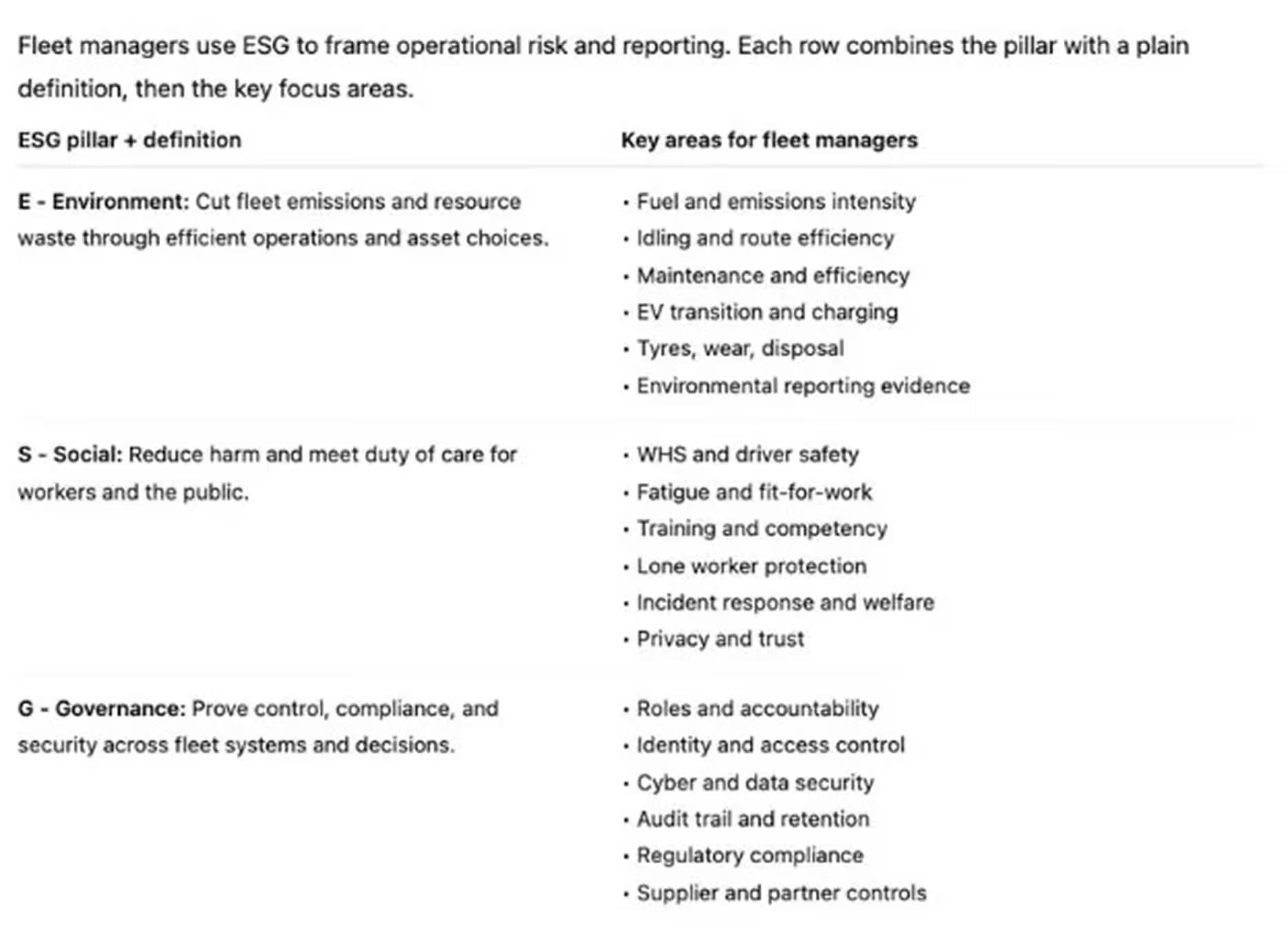
Warwick Clancy, Chief Operating Officer at Zetifi, discusses why fleet managers must better understand and act on environmental, social and governance (ESG) metrics in 2026.
From July 1 this year, mid-sized enterprises, defined as those with annual revenue greater than $200 million or more than 250 staff, will have to join the top end of town in reporting their ESG efforts.
Another year on, on 1 July 2027, it will be the turn of the next tier down – businesses with $50 million revenue and more than 100 staff.
The legislation has put the onus on businesses to take action and prove they’re doing so.
That means developing a rigorous Environmental, Social and Governance framework and policies, measuring the success of activities to promote optimal social outcomes and reduce the entity’s footprint on the planet, and disclosing progress across all aspects of operations via an annual sustainability report.
Focusing on fleet efficiency
For businesses which run sizeable fleets, minimising their vehicles’ impact on the environment makes excellent sense and it’s an area where progress can be measured and built on in real time, not just reported annually.
Putting formal policies in place that mandate employees drive to conditions and avoid speeding can enable them to create a collective difference over the long term.
That’s because it’s been proven that smooth, safe driving results in lower fuel consumption, fewer incidents and accidents, and reduced wear and tear on vehicles.
Efforts to minimise risky and inefficient driving are more likely to be effective if aberrant behaviours are detected in real time and offending drivers prompted to correct them.
Carbon emissions can be cut by this and other straightforward measures, such as reducing vehicle idling time and facilitating carpooling for workers who need to travel to the same location at the same time.
Measuring what matters
Making changes such as these – and demonstrating you’ve done so – necessitates having access to up-to-date insights into how workers behave when they’re behind the wheel of company cars, utility vehicles and mobile machinery, as well as information on the condition and fuel consumption of those vehicles.
That’s where technology has a vital role to play. When fitted to vehicles, connected trackers and telemetric devices can sense their environments, deliver precise location awareness, capture granular data on how those vehicles are being driven, and create intelligent connections between devices, systems and people.
The signals devices detect and transmit can be sent to the corporate governance team who can use that intelligence to develop comprehensive ESG metrics for the company fleet.
The evidence generated can, for example, be used to build detailed pictures of driver behaviour; identifying individuals who regularly exceed the speed limit and those whose driving patterns are erratic or unsafe.
Interventions can be triggered once pre-determined thresholds have been reached and evidence of offending drivers’ subsequent behavioural changes measured and documented in Environmental and Governance reporting.
Fuel consumption and usage data can also be captured regularly and married with service and repair histories, for every vehicle in the fleet.
Using data to drive ESG improvements
Once in possession of these insights, an ESG team can develop a comprehensive set of fleet metrics and then instigate initiatives to improve them.
A compliance program for individuals who regularly drive unsafely can, for example, be an effective means of modifying their behaviour behind the wheel.
The detection of a risk event in real time means they can be given immediate feedback followed by coaching and counselling, to prevent a recurrence of the incident.
For example, should an employee contravene their employer’s ‘no mobile phone use while driving’ policy, their vehicle’s telemetrics system could detect the breach, prompt a correction, alert their manager, log the real time coaching that occurred and preserve the evidence for ESG reporting purposes.
In the long term, such positive actions can reduce fuel consumption and vehicle wear and tear while lowering the risk of incidents and injuries for the individuals involved and those with whom they share the road.
That’s a social outcome that’s in everyone’s interest, given the devastating impact of serious and fatal accidents on families and communities.
Meanwhile, having the capability to monitor lone worker settings and respond quickly to incidents involving danger and duress make for a significantly safer working environment.
Driving ESG improvements in 2026 and beyond
Monitoring and improving sustainability is a moral imperative for responsible Australian enterprises of all stripes and sizes and a legal one for many.
Fleet operations offer one of the clearest pathways from policy to measurable proof, at a time when reporting expectations demand greater transparency and defensibility.
The smart deployment of tracker and telemetric technology can help businesses reduce the environmental impact of their fleet vehicles, while creating safer conditions for employees and other drivers on the road.
It enables them to not only measure their vehicle emissions but to show the actions they’ve taken to minimise them, while at the same time safeguarding workers and the public.
If increasing transparency, managing risk and demonstrating solid environmental and social credentials is important to your business this year, it’s an excellent addition to the company toolkit.
Zetifi’s Smart Antenna platform combines high-performance UHF and 4G/5G antennas with Bluetooth tracking and GPS logging, offering seamless integration into existing telematics platforms.
It delivers the kind of infrastructure needed for real-time carbon accounting and verifiable sustainability metrics as ESG reporting shifts from voluntary to mandatory.
On the road and in the field — how technology can safeguard workers
This article was originally published on Safety Solutions and is republished here with permission.
Source: Safety Solutions – On the road and in the field — how technology can safeguard workers
___
For businesses with mobile and field workers, occupational health and safety obligations can be harder to meet. Zetifi founder and CEO DAN WINSON sets out how connected fleet safety can help.
While Australia’s stringent occupational health and safety frameworks have helped ensure our country’s workplaces are among the safest in the world; in recent decades, workplace fatalities remain a sad reality of life.
In 2024, 188 workers across the country lost their lives due to traumatic injuries incurred at work. Four in five fatalities occurred in just six industries: agriculture, forestry and fishing; public administration and safety; transport, postal and warehousing; manufacturing; health care and social assistance; and construction.
Machinery operators and drivers accounted for 32% of those fatalities, with vehicle incidents the leading cause of fatal injuries (42%), according to Safe Work Australia.
Ensuring the businesses they work for don’t add to these tragic statistics in 2026 should be an overarching goal for all occupational health and safety teams.
Tackling risk head on
How best to do so is the question, particularly for businesses and organisations which employ large teams of mobile and field workers.
For many of these organisations, identifying the gamut of potential risks their workers face when they’re out on the road is a sensible place to start.
And then there are the incidents and events over which employees have rather more control — think erratic braking, speeding events and unsafe overtaking.
Developing policies to mitigate these unavoidable and avoidable risks should be a priority for businesses that have not already done so. Mandating employees drive to conditions, avoid speeding and seek shelter during severe storms, for example, is a straightforward way of reducing the likelihood of them coming to grief on the road.
Obtaining insights from the field
But having policies in place that require workers to take sensible precautions is just one piece of the puzzle. Being able to enforce them is the other. To do so necessitates having access to up-to-date insights into how workers behave when they’re behind the wheel of company vehicles.
That’s where technology has a vital role to play. Devices today can sense worker environments, deliver precise location awareness and create intelligent connections between devices, systems and people through connectivity, telematics and applications such as duress and lone worker safety alarm tools.
The signals they detect and transmit can be swiftly and seamlessly interpreted and sent on to key personnel, who can use that intelligence to enhance worker safety on several fronts.
However, what’s required is reliable coverage anywhere, with alerts able to be transmitted kilometres away across the likes of a farm, mining site or national park. Smart antennas and seamless integrations with third-party applications such as telematics can help here and provide robust information on issues such as driver speed, braking, acceleration and cornering performance.
This type of connected fleet safety is ultimately about visibility and proof. By combining radio-based safety features with telematics, organisations can better understand risk, improve behaviour and demonstrate that safety controls are operating in practice.
Striving to improve worker safety
That’s reassuring for workers, particularly those who are regularly sent out on the road solo. For businesses, meanwhile, it demonstrates a willingness to walk the walk when it comes to occupational health and safety.
The data collected can also be used to build detailed pictures of driver behaviour; identifying individuals who regularly exceed the speed limit and those whose driving patterns are erratic or unsafe.
Training and coaching can then be employed to help these drivers modify their behaviour. In the long term, that can foster a more accountable, safety-oriented workplace culture, while reducing the risk of accidents and injury for the individuals involved and those with whom they share the road.
Creating a safer future for your team
An engaged, high performing workforce is the most powerful asset any business can have. Protecting the people whose contributions are pivotal to your organisation’s success is a moral imperative and one that makes excellent commercial sense too. Technology can help you do so, when they’re in the field and on the road.
If creating a safer workplace is a priority in 2026, it’s an investment that will pay dividends now and for many years to come.
Source: Safety Solutions – On the road and in the field — how technology can safeguard workers

Zetifi Wins Silver at the 2026 BETTER FUTURE Australian Design Award for Product Design Technology
Wagga Wagga, Australia, 6 February 2026 – Zetifi, an Australian wireless company that designs and manufactures smart antennas for cellular and radio devices with market-leading design, has won a Silver Award in the Product Design Technology category of the 2026 BETTER FUTURE Australian Design Awards.
Zetifi’s UHF CB Smart Antenna, designed and manufactured in Wagga Wagga, New South Wales, transforms the humble antenna into an intelligent connectivity hub enabling duress alerts, lone-worker check-ins, automated asset tracking, and real-time location reporting. Supported by multiple patents and a cross-functional team, the product sets a new benchmark for connected vehicle operations and safety, with practical benefits for drivers, fleets, and remote communities.
For decades, vehicle antennas for two-way radios have remained largely unchanged, simply passing signals to and from hardware hidden elsewhere in the vehicle. Zetifi’s UHF CB smart antenna is the first vehicle antenna with active electronics integrated into the housing. As a result, the point where RF enters the vehicle becomes the place where events are detected, processed and sent to the cloud. The design unifies GPS, Bluetooth, Wi-Fi, cellular and support for UHF radios in a single compact form, enabling safety and connectivity features from the antenna itself.
“Winning this award is recognition of our expertise and insight to imagine the possibilities, develop strategies to bring them into being and pursue market opportunities with precision and patience, says Dan Winson, Founder and CEO, Zetifi. “At the same time, our ongoing success is heavily contingent on the strength of Zetifi’s relationships with our key technology partners and dealer community which has enabled our company to achieve extraordinary growth and invest in solutions to meet market the demands of businesses requiring solutions for connectivity, worker safety and compliance reporting.”
Zetifi’s UHF CB Smart Antenna started with a clear goal: improve RF performance and deliver reliable coverage for vehicles in harsh, remote environments. Safety was always central. Better connectivity meant better chances for drivers and crews to get help when matters.
Achieving that needed more than a stronger antenna. It required coordinated work across mechanical design, RF, electronics, firmware, cloud architecture, app design and continuous field testing. Early prototypes focused on signal quality and resilience. Real-world use with farmers, contractors and road crews then revealed a larger opportunity.
Customers asked simple, practical questions. Could a UHF button press raise a duress alert? Could vehicles check workers in and out automatically? Could the system confirm that radios, PPE and tools were actually on board? All while the connectivity landscape was shifting fast, with Starlink and other networks suddenly making “coverage almost everywhere” realistic for vehicles.
That changed the brief. The antenna was no longer just a way to feed a radio. By integrating GNSS, Bluetooth, Wi-Fi and cellular into the housing, it became the natural place to sense location, detect nearby devices and send events to the cloud. The team iterated quickly, using on-road data and customer feedback to refine features.
The result is a smart antenna platform that replaces stacks of antennas, routers and telematics boxes. It uses Starlink and cellular for backhaul, and turns the humble UHF CB radio into a lone worker safety solution that can integrate, via open-source APIs, with enterprise platforms. At the same time, the antenna moves computing and control into the antenna itself. GNSS, Bluetooth, Wi-Fi, cellular and UHF sit in one compact housing with an open API into telematics and enterprise platforms, so the antenna mount becomes a location-aware edge device.
Key innovations included in the UHF CB Smart Antenna are:
- User-centred design: UHF button presses and BLE tag events trigger duress alerts, check-ins and location reports without extra screens or apps.
- Mechanical and assembly: Parallel radome profiles allow part reuse, while a compression holder for the PCB array adds strength and supports efficient assembly and heat paths.
- RF and electronics: RF simulation plus on-road validation, using on-board electronics to log performance over thousands of kilometres, enables refinement, RF quality assurance and the use of thin coax for cable management and longevity.
- Software and ecosystem: Open APIs, over-the-air updates and work with Icom and Telstra turn the hardware into a platform for safety and fleet features.
- Test and validation: Shaker table testing and long-term field trials underpin an industry-leading 5-year warranty.
In addition, the antenna itself is designed to use energy efficiently and to last. Careful RF and electronics design minimise wasted power and support long duty cycles in harsh conditions. Rugged construction, high ingress protection and vibration-tolerant mechanics reduce failures and the need for early replacement. At the same time, standard mounting and cabling, plus over-the-air firmware updates, extend the useful life of each antenna as software and use cases evolve.
About Zetifi
Zetifi is an Australian wireless company that designs and manufactures Smart Antennas for cellular and radio devices. Its technology is used across agriculture, fleet, mining and enterprise sectors and supports telematics, telemetry and safety systems for vehicles and field equipment.
Media Contacts
Zetifi
Leslie Beckman, Head of Marketing
0419 705 391
leslie.beckman@zetifi.com

Zetifi partners with Geotab to deliver Connected Fleet Safety in Australia
Wagga Wagga, Australia, 30 January 2026 – Zetifi, an Australian wireless company that designs and manufactures smart antennas for cellular and radio devices with market-leading design, quality, and performance, has announced a strategic partnership with Geotab, a global leader in connected vehicle solutions.
The partnership will deliver connected fleet safety insights to Australian businesses with a focus on providing clear, evidence-based visibility into driver behaviour, helping organisations understand how safely vehicles are being operated today and where risk exists.
Zetifi develops connectivity and safety technology for fleets operating beyond reliable coverage, with its Smart Antenna platform integrating telematics, two-way radio safety features, and enterprise workflows.
By combining Zetifi’s connectivity expertise with Geotab’s advanced telematics platform, businesses will gain access to practical driver safety insights including speed, braking, acceleration, and cornering performance. These insights support safe driving assessments and deliver risk management recommendations that help protect drivers, businesses, and directors through objective, defensible data.
Founded to solve connectivity challenges in regional and remote Australia, Zetifi embeds GNSS, onboard compute, and connectivity directly into its Smart Antennas. This enables reliable data capture at the edge and seamless integration with telematics, radios, and enterprise systems, turning everyday fleet activity into safety alerts, operational insights, and documented evidence for worker safety and governance.
“Connected fleet safety is about visibility and proof,” said Dan Winson, CEO of Zetifi. “Business owners and directors carry real responsibility for how vehicles are used at work. By combining radio-based safety features with one of the world’s leading telematics platforms, we’re helping organisations understand risk, improve behaviour, and demonstrate that safety controls are operating in practice.”
Geotab is a global leader in connected vehicle solutions, supporting fleets across government, transport, utilities, and commercial sectors in Australia and worldwide. Its open platform enables partners to extend telematics data beyond dashboards and into operational systems that improve safety, efficiency, and sustainability.
“Australian businesses face rising pressure to show active lone worker safety management,” said David Brown, Associate Vice President of Geotab, APAC. “We are pleased to welcome Zetifi to our network of partners. Zetifi brings two-way radio-based capabilities such as duress, lone worker check-ins and man-down into an organisation’s existing telematics system and workflows. That approach can add safety capability without the unnecessary complexity of layering in separate duress-specific platforms, while still supporting data-backed decisions to reduce incidents and protect people and business.”
The partnership is already live, with two Connected Fleet Safety pilots deployed in Australia and an entry-level offering available immediately. A broader national rollout will focus on industries with elevated vehicle and remote-worker risk, including agriculture, mining, utilities, construction, transport, and local government. Zetifi will deliver Connected Fleet Safety as a managed service, providing structured alerts, regular reporting, and board-ready evidence packs to support ongoing safety oversight.
About Zetifi
Zetifi is an Australian wireless company that designs and manufactures Smart Antennas for cellular and radio devices. Its technology supports telematics, telemetry, and safety systems for vehicles and field equipment across agriculture, fleet, mining, utilities, and enterprise sectors.
About Geotab
Geotab is a global leader in connected vehicles and asset management, serving approximately 100,000 customers worldwide. Headquartered in Oakville, Ontario and Atlanta, Georgia, Geotab leverages advanced data analytics and AI to optimise fleet performance, reduce costs, and drive efficiency. Processing 100 billion data points daily from over 5 million vehicle subscriptions, Geotab supports Fortune 500 companies, mid-sized fleets, and the largest public sector organisations, including the U.S. federal government. Celebrating 25 years of innovation, Geotab remains committed to safety, sustainability, and data security. Learn more at www.geotab.com.au
Media Contacts
Zetifi
Leslie Beckman, Head of Marketing
0419 705 391
leslie.beckman@zetifi.com
Geotab
Edelman for Geotab
Varsha Viswanath

Zetifi and Icom launch partnership to deliver a next generation UHF CB Radio solution for Australia
Zetifi and Icom have formed a partnership to introduce a new UHF CB Radio Pack that delivers a fresh wave of innovation to a market that has seen little technological change in recent years. The combined solution brings together Zetifi’s Australian-made Smart Antenna technology and Icom’s world renowned radio engineering to create a communications package designed for modern vehicles, demanding terrain and commercial field operations.
The partnership also sets the foundation for future developments in location services, duress alerts and advanced telematics that will be of particular interest to fleet operators, utilities, emergency services, mining, agriculture and 4x4 accessory dealers across Australia.
“Bringing Zetifi and Icom technology together marks an important step forward for UHF radio in this country. This partnership combines complementary strengths and sets us up to deliver safer, smarter and more connected solutions for Australian drivers and fleet operators. This launch is only the beginning of a broader roadmap that brings location intelligence, duress capability and advanced telemetrics into the hands of customers who rely on dependable communication every day.”
— Dan Winson, CEO, Zetifi
A new UHF CB Radio Pack for Australian conditions
The pack pairs a core Zetifi Smart Antenna with the Icom IC-455 UHF CB radio to create a ready-to-install solution for 4x4 owners, trades, agriculture, transport and commercial fleets. It’s engineered for long service life, consistent clarity and dependable communications in the varied and often harsh conditions unique to rural Australia.
Zetifi Smart Antenna
Zetifi contributes its Smart Antenna platform, manufactured in Australia and backed by patented technology and a five-year warranty. Key features include:
- 3dBi gain for stable multi-terrain performance
- Heavy duty IP69K rated construction
- New matte black finish that reduces glare
- The only 500mm length CB antenna optimised for bonnets and a 580mm option for bull bars
- Proven performance guarantee.
The Smart Antenna platform also provides a pathway to optional onboard electronics that enable telematics, vehicle tracking and safety functions. These capabilities are currently in development with partners across agriculture, utilities, government and fleet management.
Zetifi technology is already used by a wide range of Australian organisations including Telstra, agricultural associations and rural connectivity programs. Local customers and installers such as Burdekin Communications in Queensland and field users across regional New South Wales have reported significant improvements in coverage and day-to-day reliability.
“Our focus is on practical innovation that improves safety and productivity in the field. The opportunity to integrate Zetifi’s antenna technology with Icom’s trusted radios allow us to move faster and deliver meaningful benefits to customers who depend on simple and reliable communication.”
— Dan Winson, CEO, Zetifi
Icom IC-455 UHF CB Radio
The pack includes the Japanese-made Icom IC-455, a 5-watt UHF CB radio known for clear audio, ease of use and long-term reliability. Features include:
- Loud and clear audio
- LCD speaker microphone with record and playback
- Automatic 12 V / 24 V voltage detection
- Five-year warranty
- Proven performance across Australian industry sectors
Icom’s UHF CB range delivers dependable communication solutions for emergency services, agriculture, mining, 4WD enthusiasts, and a wide variety of commercial and industrial applications. Built to military-grade standards, Icom’s UHF CB transceivers incorporate advanced communication technologies to ensure exceptional durability and performance. Models such as the IC-41PRO, IC-410PRO, and IC-455 are fully compatible with the 80-channel UHF CB network, delivering seamless connectivity and long-term reliability.
“Icom’s radio technology has been trusted globally across many sectors for decades. Our products are designed and built to last in the most challenging environments, tried and tested by military and humanitarian organisations. Working together with Zetifi strengthens our capabilities across the Australian market and further afield. Together, Zetifi and Icom will bring forward features that combine voice communications, location services and safety management into a single, flexible and modern platform.”
— Marty Anderson, General Manager, Icom Australia
Combined value for dealers and fleets
The new pack simplifies purchasing for Zetifi dealers and operators by providing a single, compatible, high-quality solution backed by aligned support and warranty programs from both companies. The combined strengths of Zetifi and Icom offer a clear upgrade path for future safety and telemetric features while retaining the simplicity of UHF CB communication that Australians rely on.
“MIB Projects works across the Pilbara where the environment demands equipment that is tough, dependable and easy to maintain. A solution backed by Zetifi and Icom gives us confidence that we can support our drivers and field teams wherever the job takes us.”
— Cameron Bunker, Managing Director, MIB Projects
Availability
The UHF CB Radio Pack will be available from 1 December 2025 through participating dealers nationwide and at Zetifi.com. Dealer enquiries are welcome through Zetifi.
About Zetifi
Zetifi is an Australian wireless company that designs and manufactures Smart Antennas for cellular and radio devices. Its technology is used across agriculture, fleet, mining and enterprise sectors and supports telematics, telemetry and safety systems for vehicles and field equipment.
About Icom
Icom is a global manufacturer of radio communications equipment with a long-standing history of serving both Australian consumers and professional users. Offering a comprehensive range of solutions—including Airband, Amateur, Land Mobile, UHF CB, Marine, LTE/Networking, and Satellite Communication — Icom products are built on a foundation of Japanese engineering and quality, earning worldwide trust for their performance, durability, and reliability.
Media Contacts
Zetifi
Leslie Beckman, Head of Marketing
0419 705 391
leslie.beckman@zetifi.com
Icom Australia
Kitty Mau, Marketing Manager
0409 017 979
kittym@icom.net.au
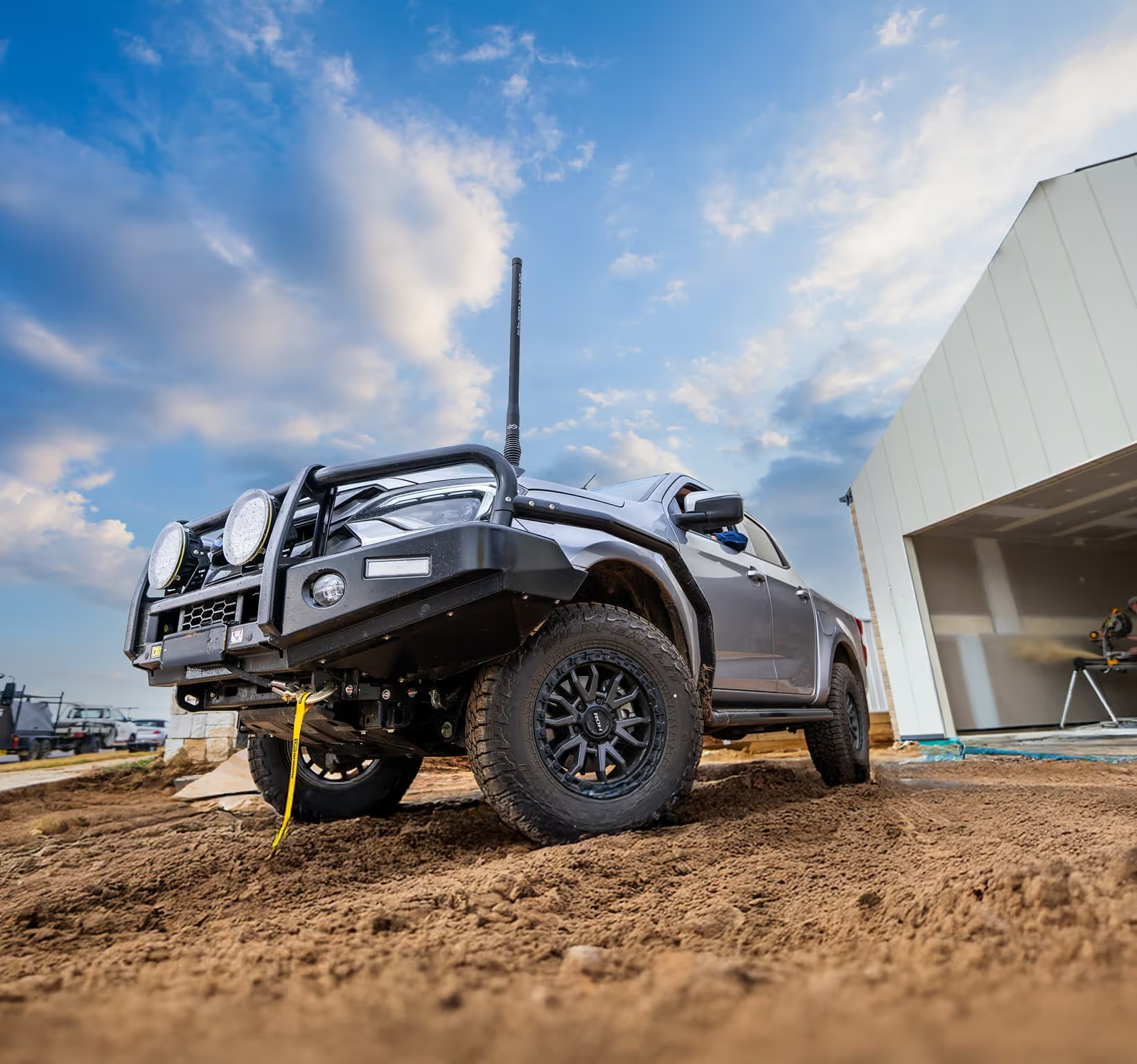
IP69K Certified: Confidence for Customers, Backed by a 5-Year Warranty
When you’re working in mining, agriculture, or any environment where equipment faces dust, mud, and regular high-pressure washdowns, you need technology that’s built to survive. That’s why Zetifi antennas are now certified to IP69K — the highest international standard for protection against dust and water ingress. This means our antennas can handle the toughest cleaning routines and the harshest conditions, giving you confidence that your connectivity will keep working, no matter what.
We back this up with a 5-year warranty, so you know your investment is protected for the long haul.
What is IP69K and Why Does It Matter?
IP69K is the gold standard for ingress protection. The “IP” rating system (Ingress Protection) uses two numbers: the first for solids like dust, the second for liquids like water. IP69K means the device is completely dust-tight and can withstand high-pressure, high-temperature water jets from every angle. For our customers, this translates to antennas that won’t fail after a mine site washdown, a muddy harvest, or a stormy day in the field.
What Does Certification Mean for You?
Our IP69K certification isn’t just a label — it’s independent proof from Compliance Engineering, a respected Australian test lab, that Zetifi antennas meet the highest standards. You can view the full test report and see photos of the testing process right here in this blog.
How Do We Achieve IP69K Protection?
Delivering this level of protection starts with great design and careful engineering. Every Zetifi antenna is built with precision-moulded housings and high-quality gaskets to keep out dust and water. The real secret is our use of potting compounds to fully seal the internal electronics. Potting fills every void inside the enclosure, creating a solid barrier that blocks dust, water, and steam — even under extreme pressure and temperature.
This approach means there are no paths for ingress, even during the most aggressive cleaning procedures. Our design team works closely with manufacturing to ensure every unit meets these standards, not just the ones sent for testing.
The Testing Process
Our antennas were tested by Compliance Engineering in Victoria, Australia, following international standards (AS 60529:2004 and ISO 20653:2013). The process included:
- Probe ingress tests to confirm no openings larger than 1 mm
- Dust chamber tests with talcum powder under vacuum
- High-pressure steam jet cleaning with 80°C water at up to 100 bar, from four angles, on a rotating turntable
After each test, the antenna was opened and inspected for any signs of dust or water ingress. The result: zero penetration, full compliance.
See the Results for Yourself
We believe in transparency. That’s why we’re sharing the full report and photos of the testing process. These show exactly how our antennas were challenged and how they performed.
Built for Your Environment — Guaranteed
IP69K certification gives you confidence that Zetifi antennas are ready for the harshest environments — whether it’s a mine site washdown, a muddy paddock, or a dusty outback road. Combined with our 5-year warranty, it’s another step in our commitment to delivering products that combine innovative design with uncompromising durability.
If you have questions about our testing, want to see the report, or need advice on antenna selection for your application, get in touch. We’re here to help.
.avif)
Engineering for Harsh Environments
We knew from the outset that better antenna performance would be a key differentiator. But we also understood that it had to be achieved in parallel with quality and durability that matched, or better yet exceeded, the best in the industry. That’s why antenna quality has never been an afterthought. It’s been a core part of our engineering culture from day one, guiding every decision from material selection to mechanical design and testing.
Antenna Quality Starts with Engineering Excellence
Best Materials - best in class quality starts with sourcing the best materials. We’re fortunate to have Warwick and Wei on our team. Their long careers at GME and RFI have given them deep insight into global supply chains and the standards required to build antennas that survive in the real world. While we compete with GME and RFI, we hold both companies in very high regard. They’ve set the benchmark for traditional antenna design and continue to build exceptional products. Zetifi is taking a different path, not by trying to outdo traditional manufacturers at their own game, but by innovating in both design and functionality.
Technology Innovation - while not all of our antennas contain active electronics, the methods we’ve developed to support those advanced features have raised the bar across our entire product range. Our work on smart antennas, including dual-gain models that dynamically switch between high and low gain, and combination LTE and UHF antennas that simplify installation and improve performance, has driven a deeper understanding of RF behavior, mechanical integration, and environmental resilience. These insights have allowed us to produce antennas with exceptional RF and mechanical performance, validated by millions of real-world data points from vehicles, farms, and field deployments across Australia.
Design Excellence - our mechatronics engineer Ben, also formerly of GME, led the development of our radome using a first-principles approach. We chose a parallel radome design, which is rare in the industry due to its added material cost. But it delivers two major benefits:
- Superior structural integrity, with better resistance to impacts like bird strikes and rough handling.
- Consistent internal geometry, allowing us to secure the antenna element using a custom injection-moulded component we call the PCB array support.
This support has a small amount of flex, just enough to tension the antenna element inside the radome. The radome itself is made from high-strength fiberglass with a manufacturing tolerance of ±0.1mm. The support compensates for this, eliminating rattle and ensuring long-term stability. Unlike foam, which compresses and degrades over time, our injection-moulded plastic maintains its shape and performance even after years of vibration and shock.
Vibration Testing: Simulating Real-World Abuse
To validate our designs, we use a Bruel & Kjaer V830-335 shaker table, a high-end electrodynamic vibration system used in aerospace and automotive testing. This machine allows us to simulate the full spectrum of vibration profiles encountered in real-world driving, including:
- Random vibration to replicate unpredictable terrain
- Sine sweeps to identify resonant frequencies
- Shock pulses to mimic potholes, bird strikes, and sudden jolts
The system delivers up to 9.81 kN of force, with accelerations exceeding 700 m/s², and supports payloads up to 160 kg. We run our antennas on this table for hundreds of hours at high intensity, simulating between 40,000 and 100,000 km of corrugated road driving. The vibration profiles are programmable, allowing us to replicate specific road conditions from different regions and vehicle types. Check out an example test:
After each test, we disassemble the antennas and inspect every component for fatigue, wear, and performance degradation. We’re not just looking to survive. We’re looking to outperform.
Real-World Validation and Warranty Confidence
Lab tests are only part of the story. We also offer an open invitation to anyone who has driven more than 200,000 km with one of our antennas: send it back, and we’ll replace it. Not because it has failed, but because we want to inspect well travelled antennas to ensure our lab simulations match field performance. We're glad to report that they do.
Antenna quality isn’t just a feature. It’s a foundation.
We’re confident in our materials, our design, and our testing, and we want our customers to be just as confident. That’s why we’ve increased our warranty from 2 years to 5 years.